Who Gets To Look?
Who Gets To Define Reality?

Eliot Elisofon in Yaka village, Congo, in 1951. Image: Joan Elisofon/National Museum of African Art
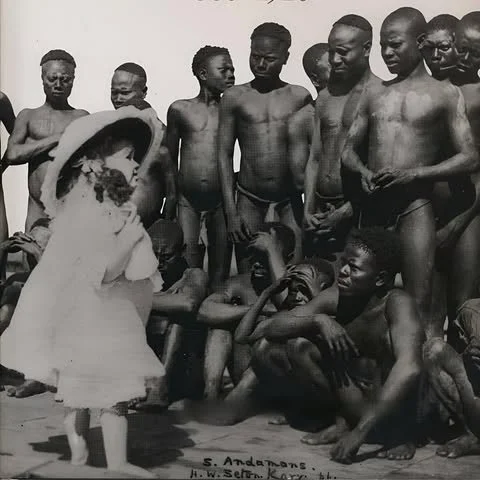
The act of looking carries with it the weight of history and the violence of mis-recognition. It is always enmeshed in power and hierarchies that decide which bodies are centered and which are peripheral.
Historically, certain groups have been granted the privilege to look freely, to define what is seen, and to impose meaning onto others. The one who looks claims a perspective, while the one looked at is often positioned as a spectacle.
Mary Deane, daughter of Census officer, on government steamer with a group of Onges, Little Andaman, 1911. Photograph: H.W Seton Kerr, Source Royal Anthropological Institute photographic collection (Edwards:1992)
What assumptions structure our vision? What histories undergird our ways of seeing? What impact does our gaze have upon those we behold?
These questions call for a radical awareness of positionality, that our ways of seeing are never detached from our social location, and that recognition itself can be a form of violence if it serves to discipline rather than liberate.
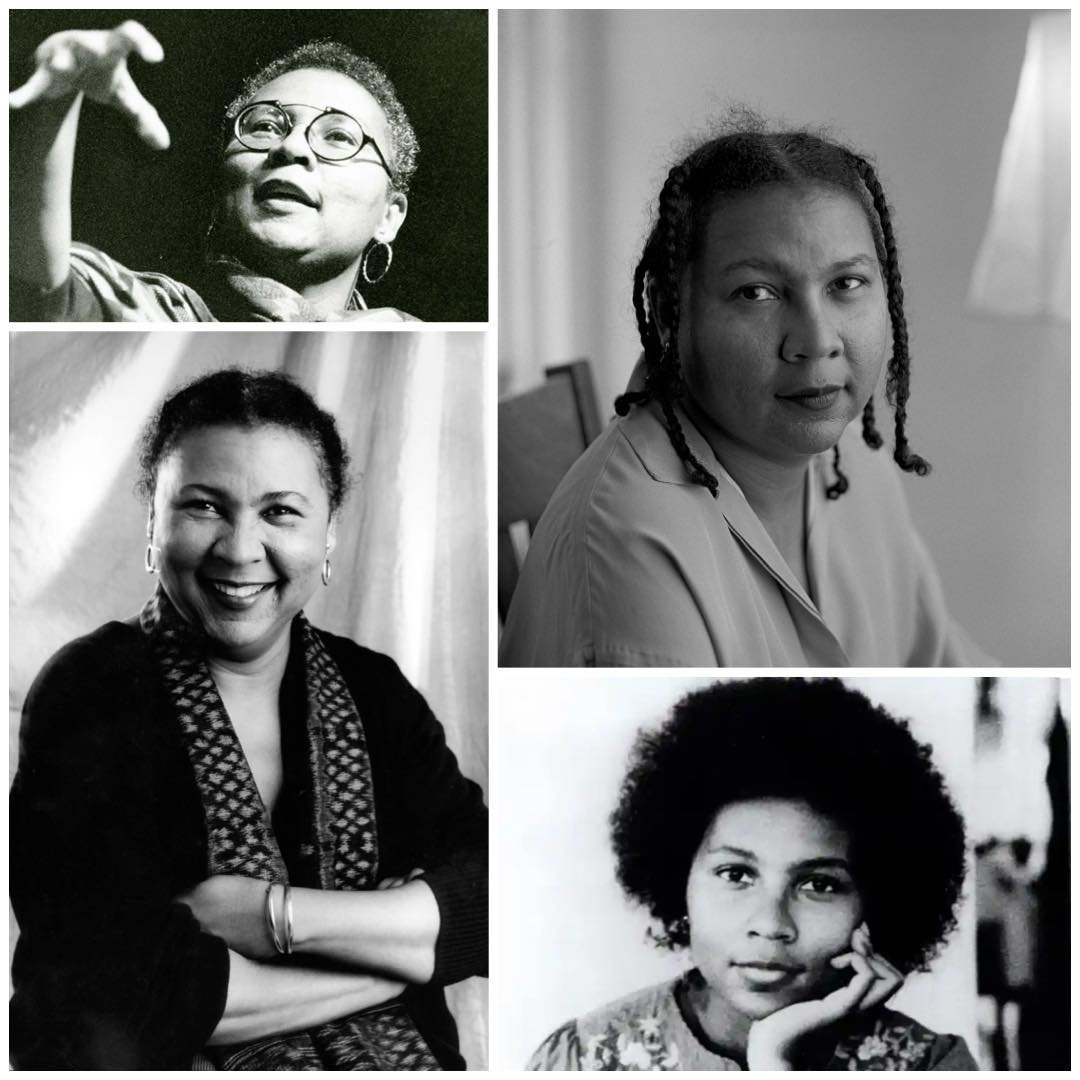
bell hooks collage by Tess Rafaella de Oliveira
bell hooks’ concept of the “oppositional gaze” challenges the dominant paradigms of visibility by asserting the right of the marginalised to look back.
To look back, as hooks describes it, is to reclaim subjectivity. It is to transform the gaze from a tool of control into a practice of resistance.
This oppositional gaze disrupts the visual field, reminding us that spectatorship is not a one-way transaction but a contested terrain. It poses a challenge to the idea that only certain subjects have the authority to define what is seen and what is meaningful.
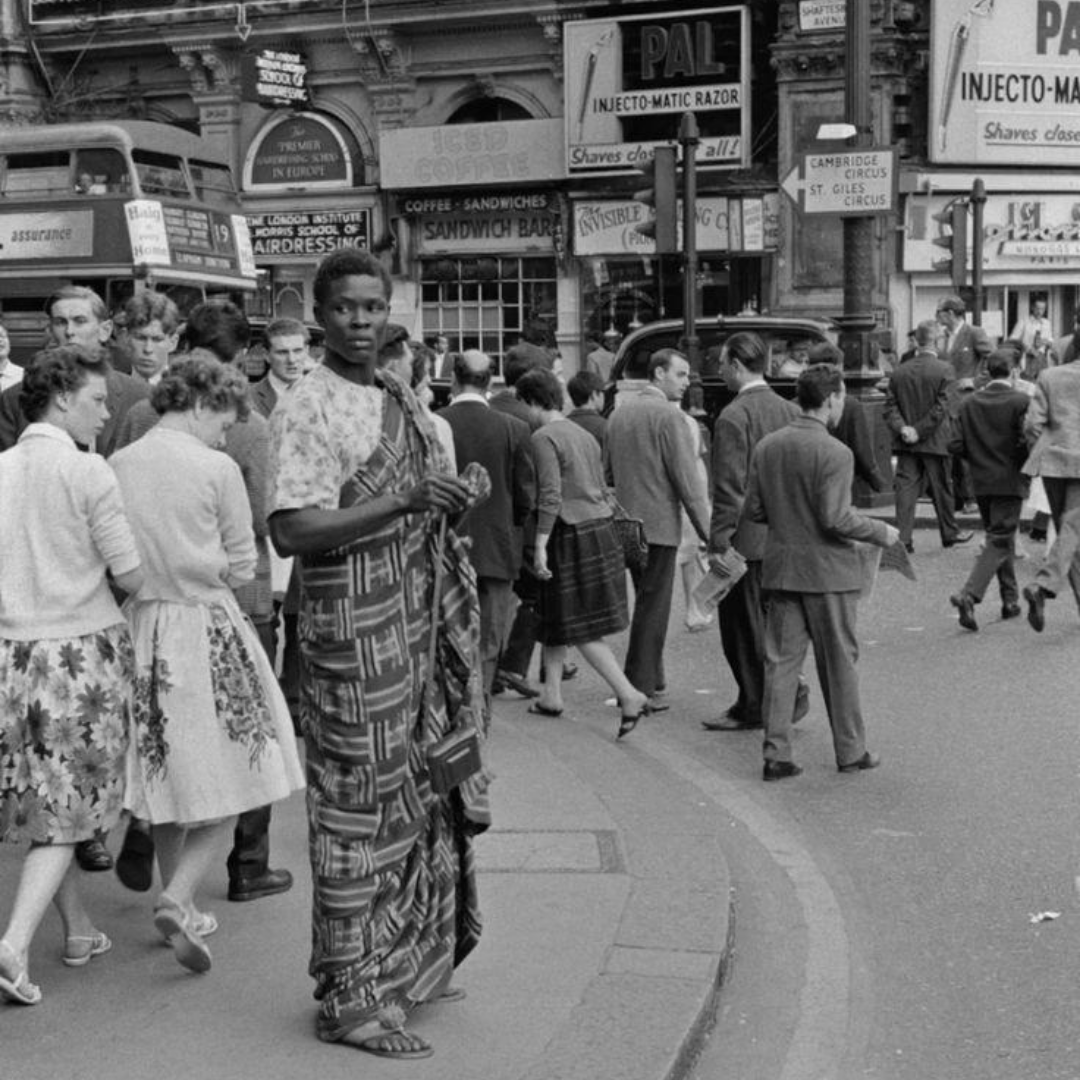
Markus Afedzi in Piccadilly Circus, London 1961 (Photo by Graphic House/Archive Photos/Getty Images)
In a world increasingly saturated with images, where surveillance technologies, social media, and spectacle define our everyday realities, the ethics of looking become ever more urgent. We must ask: Are we seeing, or consuming? Are we bearing witness, or enacting voyeurism? Can we ever look without implicating ourselves in the systems we wish to critique?
The gaze cannot be disentangled from power, but it can be reoriented. By cultivating humility, reflexivity, and ethical intention, we can begin to shift the terrain of looking from alienation to recognition.