Why does Hollywood keep making the same face?
Entertainment should include the full range of human appearance, including the range that has been historically marked as too Black, too disabled, too fat, too old, too foreign, too asymmetrical, too strange. We have to pay attention to what gets lost when that range is excluded. The stories that aren't told. The performances that aren't given. The particular truth that only a certain kind of face, having lived a certain kind of life, can convey.
There is something to be said, at the level of pure craft, about what a difficult face does on screen that a beautiful one cannot. A face the world has marked as wrong carries its history visibly, it can’t conceal what it has lived through. It arrives already in friction with the world, already carrying the accumulated weight of being a body the world has never quite made room for, a body that is always greeted as a problem.
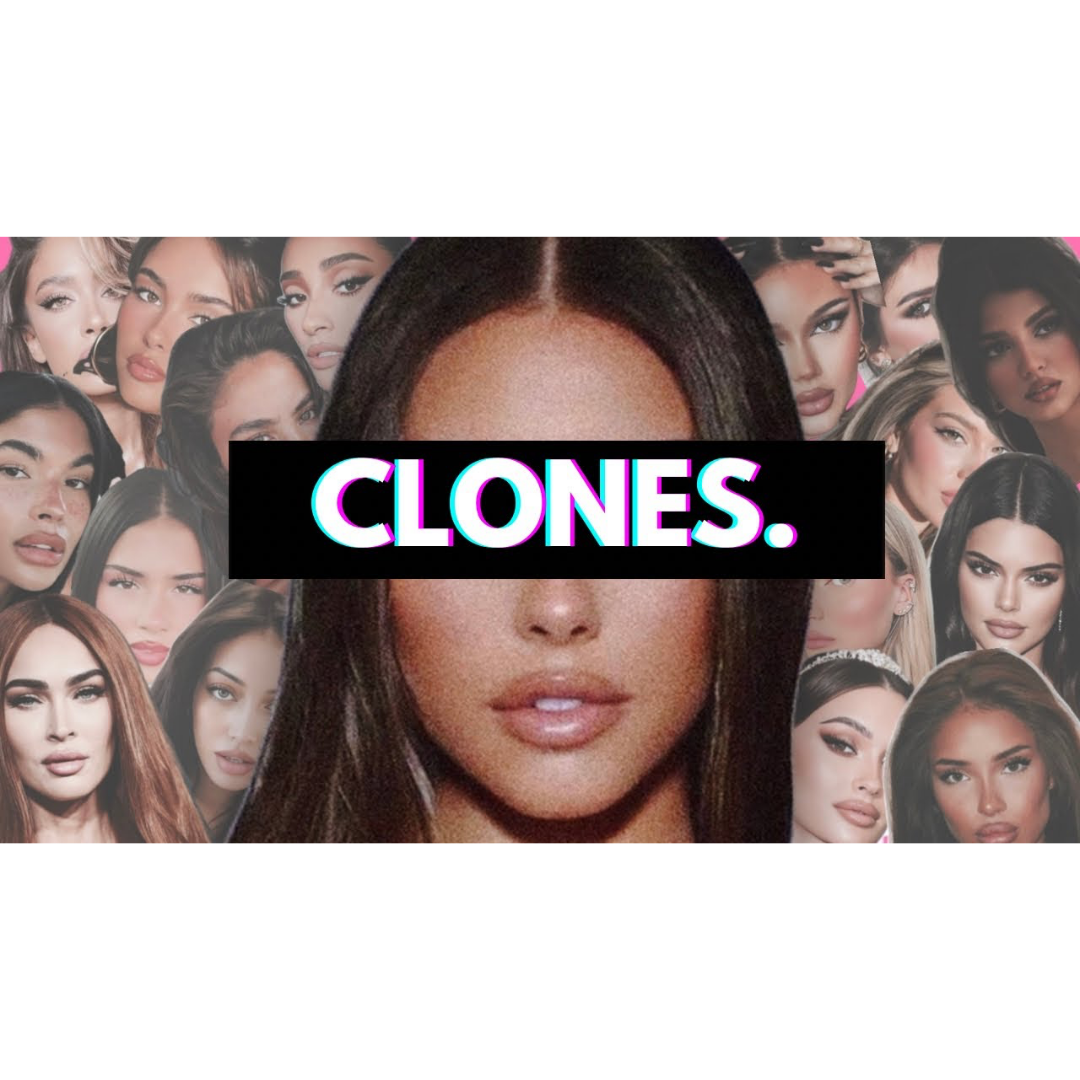
Everybody looks the same! Different names. Different costumes. Different cities, decades, tragedies. But the same jaw, the same symmetry, the same skin, lifted, filled, unmarked by time or difficulty. When we go to the cinema, we almost never see ourselves yet most people don’t look like film stars. We have ordinary faces, or difficult ones, or faces marked by age and illness and weather.
The right to be strange-looking remains largely reserved (if it’s granted at all) for white male actors. There is a long tradition in Hollywood of what we might call the “Ugly White Man as Leading Man”. They are permitted a roughness and unconventionality that their female and non-white counterparts are not.
When a film fills its frame with beautiful, able-bodied, conventionally attractive people moving through the world with the ease of those whose bodies are fully legible to the systems built around them, it is making a claim about who counts as human. It is telling us that certain bodies are not narrative bodies, that certain faces do not merit the camera's sustained and serious attention.
The standard response to beauty's exclusions is inclusion: cast more diverse bodies, celebrate more kinds of faces, expand the tent. The beauty ideal has renegotiated its terms across decades admitting cautiously and selectively certain Black faces, certain light-skinned proximities to whiteness, certain hair textures, and yet the hierarchy has held regardless.
The Black actors who become major stars still conform to a particular kind of conventional attractiveness. The standard has not been dismantled. It has been extended, minimally, to absorb just enough to silence the complaint.
There is no winning move available from inside the game. Aspire to whiteness and you legitimise a standard that was designed to exclude you. Assert a counter-aesthetic and you produce a counter-norm that, if it achieves mainstream visibility, is promptly absorbed, commodified, and credited to white women who adopted it as trend.
There is no position available from inside beauty's logic that does not, in the end, reproduce it. We don’t need more bodies allowed to be beautiful, we need to dismantle beauty as the organising principle of how we see each other.


There are things we can do right now, we can choose what we consume. We can seek out work that actually represents us, work that carries our lineage and our specific and inherited way of being in a body. Work that was made by and for people who look like us and move like us and have lived something like what we have lived. We can stop spending money and attention on work that requires us to disappear in order to enjoy it. And we can relearn our relationship to our own bodies, what they do for us, what they carry, and what they have survived.